Menu
The WiN Safety Group of Expertise is an international professional initiative dedicated to strengthening nuclear and radiological safety through the active engagement and leadership of women experts.
The group brings together specialists from regulatory bodies, technical support organizations, research institutions, emergency response agencies and the nuclear industry.
WiN Safety promotes a culture of safety, security and responsibility by encouraging knowledge sharing, capacity building and innovation in safety-related practices. It aims to increase the visibility, participation and influence of women in decision-making processes related to nuclear safety, while fostering collaboration across borders and disciplines.
The initiative contributes to sustainable development by supporting safe and secure uses of nuclear technologies in health, energy, industry, agriculture and environmental protection. By empowering women professionals and promoting diversity in expertise and perspectives, WiN Safety enhances institutional performance, public trust and resilience in the nuclear sector worldwide.
Nuclear law is a unique and specialized field of law that has been in existence for over 60 years and is concerned with all aspects of nuclear energy, including radiological protection, nuclear safety, management of spent fuel and radioactive waste, environmental protection, transport, nuclear security, non-proliferation, safeguards, nuclear liability, and international trade, among other topics.
In recent years, interest in nuclear energy has increased dramatically, not only with traditional technologies but also with new and innovative technologies. The future of the nuclear industry requires a robust and diverse workforce to drive performance and innovation, including in the field of nuclear law.
Thus, regardless of whether the issue is the development of small modular reactor, the decommissioning of a Generation III reactor, the licensing of a deep geological repository, the nuclear liability of a floating nuclear power plant, or the transport of radioactive materials, all aspects of nuclear energy require a skilled and knowledgeable workforce, which includes experienced nuclear lawyers.
In the legal field however, “current research shows that females make up the majority of law students and graduates globally, but this is not reflected in the statistics of those working at senior levels, across all legal sectors, where women still constitute a far smaller proportion than their male counterparts.”
The Women in Nuclear Law Initiative (WiNLI) was launched in March 2023 under the framework of the partnership between WiN Global and the OECD Nuclear Energy Agency (NEA). This partnership was launched in September 2022 with the signing of a Memorandum of Understanding between the NEA and WiN Global to further strengthen the common objective of both to improve gender balance in the nuclear sector.

To promote excellence in nuclear and radiological safety by empowering women professionals, strengthening cooperation and advancing knowledge, leadership and innovation in safety-related fields worldwide.
The IAEA supports WiN_Safety by providing international guidance, technical expertise and a global cooperation framework. CNESTEN contributes through national leadership, technical resources, training facilities and operational experience in nuclear and radiological safety and security.
WiN Safety addresses the need for greater diversity, expertise and leadership in nuclear safety. By mobilizing women professionals, it enhances safety culture, improves institutional performance and ensures that safety policies benefit from inclusive, multidisciplinary and international perspectives.
Join us, share your expertise, and help shape meaningful impact across the WiN Global community.
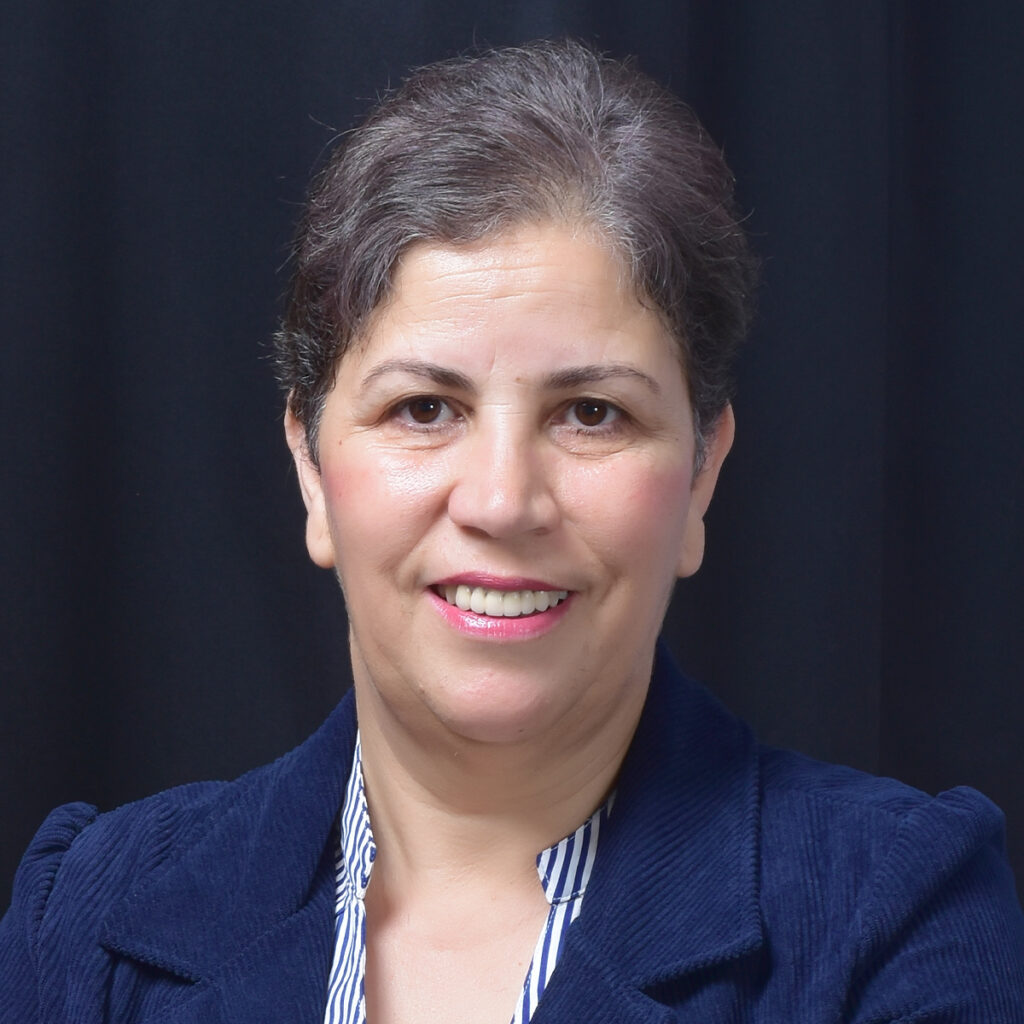
Khadija Bendam – National Center for Nuclear Energy, Sciences and Nuclear Techniques (CNESTEN)
Khadija Bendam is Head of Nuclear and Radiological Safety and Security Audits at CNESTEN and an IAEA expert in EPR, safety and security. She is Morocco’s WHO/REMPAN focal point, Board Member of WiN Global and WiN Africa, President of WiN Morocco, and Chair of INSC. Recognized by UNESCO in 2024 and by the European Parliament in 2025 for her leadership, she received multiple awards from 2022 to 2025.